As homeowners in Montgomery, IL, one understands how frustrating a leaking air conditioner can be. First, check for common causes such as a clogged condensate drain, a malfunctioning pump, or a frozen coil. Try simple DIY fixes like replacing the air filter or cleaning the coils. If the leak persists, it’s best to call in a professional HVAC technician to properly diagnose and repair the issue. Regular maintenance is key to preventing future leaks and keeping your AC system running efficiently. To learn more about protecting your home’s comfort, keep reading.
Understand the Common Causes of AC Leaks
When an air conditioning (AC) system begins to leak water, it’s important to identify the underlying cause quickly. Several common issues can lead to an AC leak, including a clogged condensate drain line, a malfunctioning condensate pump, a frozen evaporator coil, or a cracked condensate pan. A clogged drain line prevents the normal flow of condensation, causing it to back up and leak. A faulty condensate pump may fail to remove moisture properly. A frozen coil can result in ice buildup that eventually melts and leaks. And a cracked or damaged condensate pan simply allows the water to escape. Experienced AC repair technicians can diagnose and fix these issues promptly to restore comfort.
Inspect the AC Unit Thoroughly for Leak Sources
Once you’ve identified the common causes of an AC leak, thoroughly inspect the unit to pinpoint the exact source. We recommend starting by checking the air filter, as a dirty or clogged one can restrict airflow and cause condensation buildup.
Next, examine the condensate drain line for any clogs or blockages that could be preventing proper drainage. Look for any loose connections or damage to the drain pan, as these issues can also cause leaks. Finally, inspect the coils and compressor for signs of wear or damage. If you notice any issues, it’s best to have a professional take a closer look and make the necessary repairs to stop the leak.
Try These Simple DIY Leak Repair Techniques
If the leak is minor, we can try some simple DIY techniques to stop it. First, check the air filter and replace it if it’s dirty. A clogged filter can restrict airflow and cause condensation buildup. Next, clear any debris or leaves from around the outdoor unit to guarantee proper airflow. Finally, use a stiff brush to clean the coils, as dirt buildup can block heat transfer and lead to leaks. Ensure proper airflow around the outdoor unit to prevent leaks.
When to Call in a Professional HVAC Technician
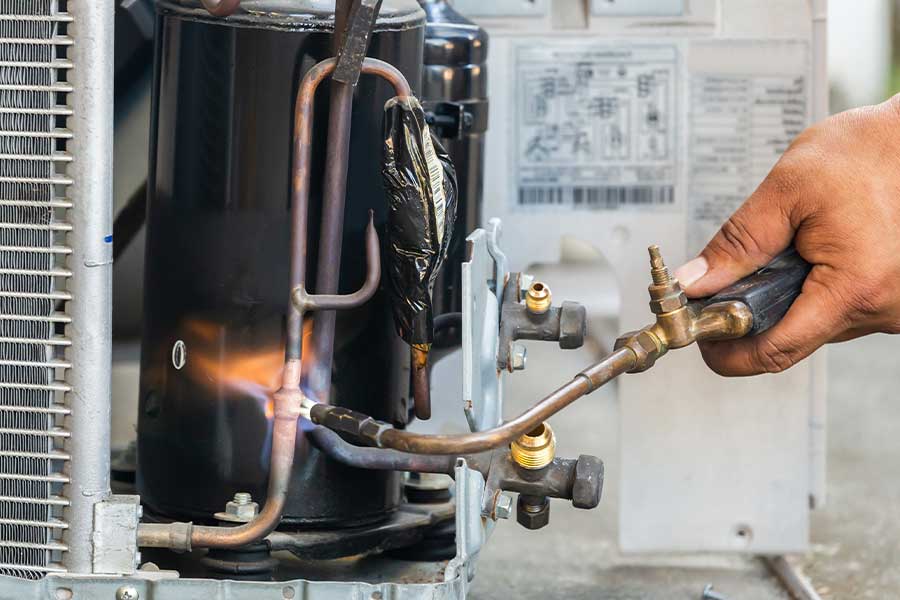
While DIY troubleshooting can address minor issues, there are times when it’s best to call in a professional HVAC technician. If the leak persists or worsens despite your efforts, it’s likely a more complex problem that requires the expertise of a trained specialist. They’ll have the tools and knowledge to properly diagnose and fix the issue, ensuring your AC unit functions safely and efficiently. Plus, tackling major repairs on your own could end up costing more in the long run if you inadvertently cause further damage. Preventive maintenance extends the lifespan of the AC unit. When it comes to your home’s comfort and the well-being of your HVAC system, it’s always better to err on the side of caution and let the pros handle it.
Proactive Maintenance to Prevent Future AC Leaks
Regular maintenance of your air conditioning system is key to preventing future leaks and ensuring long-term performance. We recommend the following proactive steps:
- Schedule Annual Check-Ups: Routine maintenance by a licensed HVAC technician can identify and address potential issues before they lead to leaks or more costly repairs.
- Clean the Condensate Drain Line: Clearing obstructions in the drainage system helps prevent backups that can cause water to spill out.
- Monitor Filter Changes: Replace the air filter every 1-3 months to keep the system operating efficiently and reduce strain that may contribute to leaks.
Taking a proactive approach to AC maintenance can save you time, money, and headaches down the road.

Conclusion
Tackling an AC leak can be a real headache, but with the right know-how, you’ll be back on the road to cool, dry comfort in no time. Keep a close eye on your system, address any issues promptly, and partner with a trusted HVAC pro when needed – that’s the recipe for keeping your home’s climate as invigorating as a summer breeze. Don’t let a leaky AC unit rain on your parade!