
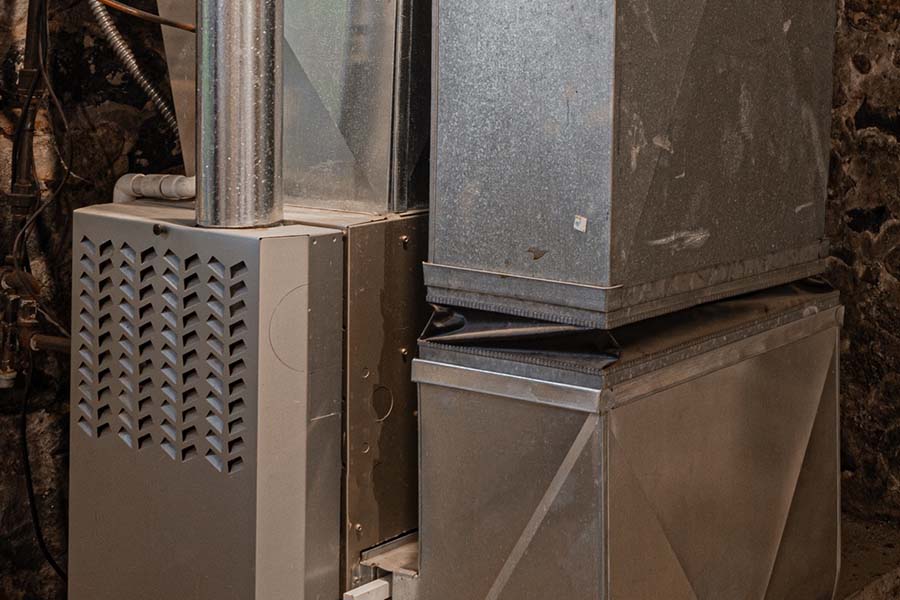
A puddle of water near your furnace is one of those sights that tends to stop homeowners cold. Furnaces are heating appliances, not plumbing fixtures, so water pooling near the base of the unit feels immediately out of place. In reality, furnace water leaks are among the more common service calls our team handles throughout Geneva, IL, particularly during the colder months when temperature swings along the Fox River Valley put additional stress on HVAC systems and their drainage components.
As heating service providers in Geneva, IL, our technicians are well-acquainted with the conditions that contribute to furnace moisture issues in this area. Geneva’s combination of frigid winters, frequent freeze-thaw cycles, and higher humidity near the Fox River can create conditions where condensate lines back up, coils freeze, or drainage components fail. Understanding the most likely causes helps homeowners respond appropriately when water appears where it should not.
Common Reasons for Water Leaking From HVAC Furnaces in Geneva, IL
1. Condensation Issues With High-Efficiency Furnaces
High-efficiency furnaces, often identified by their white PVC exhaust pipes rather than metal flue pipes, extract more heat from combustion gases than standard units do. That process produces moisture as a byproduct, which is normal and expected. The water is designed to exit the system through a condensate line and drain away harmlessly.
The problem arises when that condensate line becomes clogged with algae, debris, or mineral buildup, or when it disconnects at a joint. When the line cannot drain, water backs up and finds its way out through the path of least resistance, which is often around the base of the furnace. This is one of the most frequently encountered furnace repair scenarios our team diagnoses in Geneva, IL, homes, and it is also one of the more straightforward fixes when caught early.
Signs pointing to a condensate drainage issue include:
- Water pooling directly beneath the furnace during or shortly after a heating cycle
- Visible dripping from the PVC condensate line at a connection point or along its path
- A gurgling sound from the condensate trap, which can indicate a partial blockage
2. Drainage Issues From the Air Conditioner
In homes with a shared HVAC system, the furnace and air conditioner use the same internal drain infrastructure. When the furnace is positioned beneath the air conditioner’s evaporator coil, water from the cooling system can drip downward and collect near the furnace, creating the impression that the furnace itself is leaking.
The source of this water is typically a clogged air conditioner drain line, a cracked drain pan, or a drainage configuration that has developed a low point where water collects rather than flows freely to the drain. Although the furnace is not the origin of the problem in these cases, the water still requires prompt attention to avoid damage to both units and the surrounding area.
3. Dirty Filters Causing Frozen Coils
Restricted airflow through a dirty filter can cause the evaporator coil to drop below freezing, allowing ice to accumulate on its surface. When the system cycles off or the restriction is partially relieved, that ice melts, and the resulting water has to go somewhere. It frequently ends up on or around the furnace, creating what appears to be a leak from the furnace.
This is a situation where a straightforward maintenance habit, keeping the filter clean and replacing it on schedule, prevents a problem that can otherwise cause real water damage if it goes unaddressed.
4. Furnace-Mounted Humidifier Leaks
Many Geneva, IL, homes use whole-home humidifiers mounted directly to the furnace to combat the dry indoor air that comes with tightly sealed, well-insulated construction during winter. These units connect to both the water supply and the furnace’s air distribution system, and they can develop leaks from cracked water lines, mineral deposits that clog the drain, or valves that fail to close properly.
A humidifier leak can produce water even when the furnace is not actively running, since the humidifier may operate on its own schedule based on indoor humidity levels. If you notice water near the furnace during mild weather or when the heating cycle has not recently run, the humidifier is worth examining as a potential source.
How to Assess the Urgency of a Furnace Water Leak
Not every furnace leak carries the same level of urgency, but none should be ignored. Here is a practical framework for gauging how quickly to respond:
- Minor leak with normal system performance: A small amount of water with no other symptoms usually points to a condensate line issue or a minor drain problem. The system can often continue running for a brief time, but a service call should be scheduled promptly before the issue escalates.
- Recurring or persistent water with visible rust or staining: Ongoing moisture indicates a problem that has been developing for some time. Corrosion on the furnace cabinet or the surrounding floor is a sign that water has been present long enough to cause secondary damage. A professional assessment is needed to determine whether the issue is a drain, a pump, or an internal system issue.
- Water accompanied by electrical issues, unusual odors, or performance problems warrants shutting the system down and contacting a technician without delay. Water near electrical components is a safety concern, and an unusual smell in combination with a water leak can indicate a heat exchanger issue that requires immediate professional evaluation.
What a Professional Inspection Covers
When our technicians respond to a furnace water leak in Geneva, IL, the inspection process is systematic rather than reactive. A thorough diagnosis typically includes:
- Examining all visible furnace components for signs of moisture, rust, or water damage
- Checking the condensate line, trap, and pump for clogs, cracks, or disconnections
- Inspecting the air conditioner’s evaporator coil and drain pan for overflow or damage
- Evaluating the humidifier for leaks, mineral buildup, or valve failure
- Assessing the heat exchanger for cracks, which represent a safety concern beyond the water issue itself
Identifying the precise source of the leak before any repair work begins is what separates a lasting fix from a temporary patch.
Andersen Keeps Geneva Homes High and Dry
Water near a furnace is a signal worth taking seriously, and the underlying cause is almost always identifiable and correctable when addressed by an experienced technician. Staying ahead of the issue through consistent furnace maintenance is the most reliable way to prevent condensate line clogs, catch drainage problems early, and keep the system operating as it should throughout the long Geneva, IL, heating season.
Andersen Plumbing, Heating, and AC Repair serves homeowners throughout Geneva, IL, and the surrounding Fox Valley communities. Contact our team today to schedule a furnace inspection or address a leak before it causes more significant damage.