




Sugar Grove sits at the southern edge of Kane County, where the suburban edge of the Fox Valley meets the wide agricultural fields of the surrounding township. It is a community of newer planned subdivisions mixed with older rural-residential properties, and the homes here tend to run large — which means the cooling systems inside them carry a real load through Illinois summers. When an AC goes down in a 2,500-square-foot home in August, the temperature inside can climb quickly.
Andersen Plumbing, Heating and AC Repair has been serving Kane County communities since 1985. Our licensed technicians arrive prepared to diagnose and repair most cooling problems on the first visit, and we give you a clear, upfront price before we begin any work. We are available around the clock, because a system failure on a Saturday night deserves the same response as one on a Tuesday afternoon.
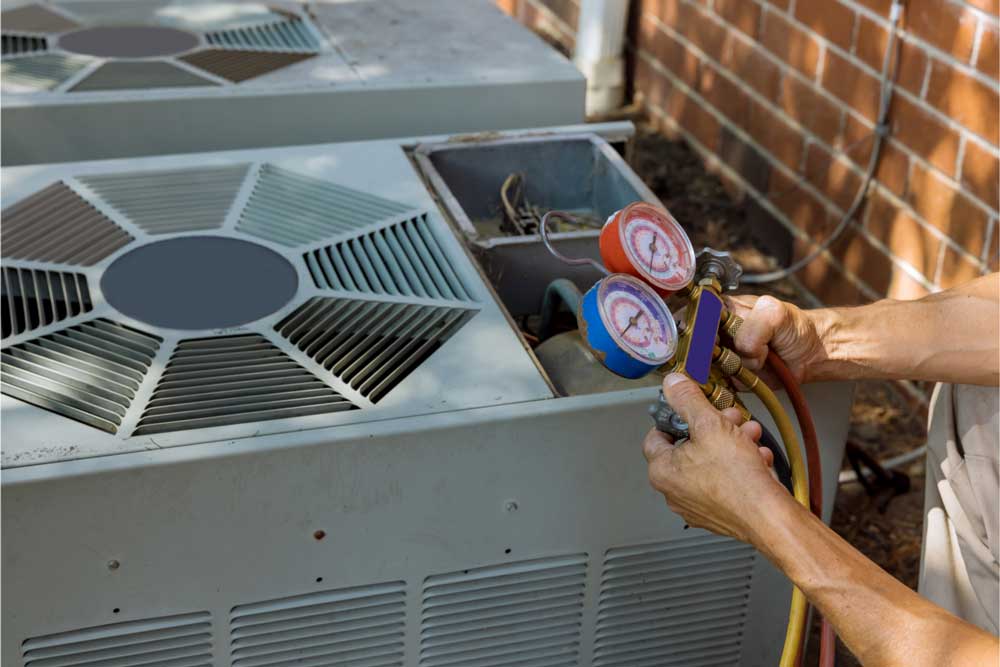
The newer subdivision homes that make up a large portion of Sugar Grove’s residential landscape were built primarily in the late 1990s through the mid-2000s. That puts a significant number of original cooling systems right at or past their expected service life. Equipment that was sized and installed for a home when it was first occupied may also be showing its age in ways that show up gradually — longer run times, rooms that never quite get comfortable, and energy bills that creep up year after year before a more obvious failure occurs.
Our repair service addresses the full range of what we find in these homes. We diagnose and repair refrigerant leaks, replace failing capacitors and contactors, service compressors, clean evaporator and condenser coils, repair or replace blower motors, and clear blocked condensate drain lines. We also handle thermostat and control board issues that can make an otherwise functional system behave unpredictably. Whatever the problem, we explain what we find in plain language and give you the price before we start.
We work on all major brands and system types, including central air, heat pumps, and ductless mini-splits.
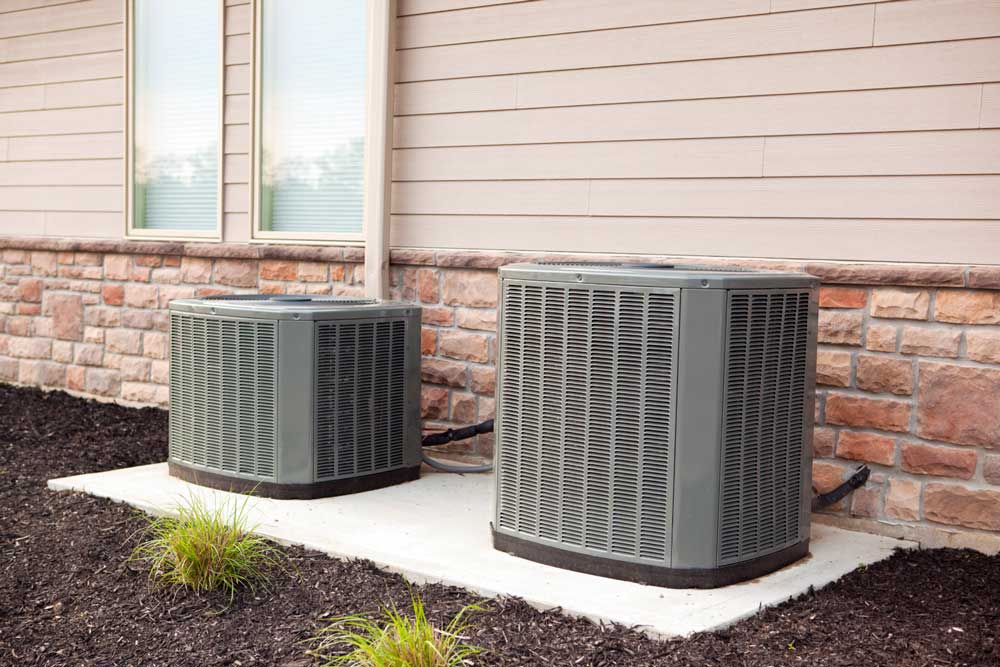
Sugar Grove’s larger homes mean more square footage to cool, and a system that is struggling will make itself known. Here are the warning signs to watch for before a repair becomes a replacement conversation.
Catching these early usually keeps the repair straightforward. We are available 24 hours a day, so do not wait until the system shuts down completely.
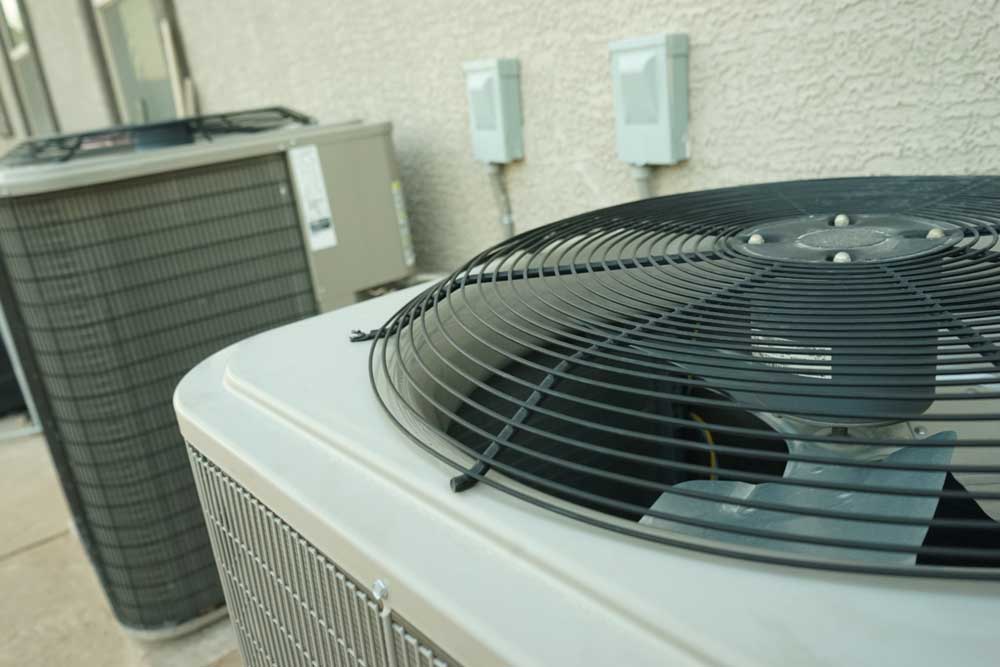
Sugar Grove’s housing profile creates a specific pattern of AC failures that we see season after season. Homes built during the late 1990s construction boom were often equipped with systems at the lower end of the efficiency range available at the time, and many of those systems are now past the point where deferred maintenance can be ignored. Capacitors that have been weakening for years finally give out. Coils that have never been professionally cleaned become so restricted that the system loses meaningful cooling capacity.
The open land surrounding Sugar Grove also contributes to the problem. The village sits at the transition between suburban Kane County and the agricultural fields to the south, which means outdoor condensers draw in a combination of suburban yard debris and field particulates — cottonwood, grass clippings, and crop dust — that accumulates faster than in more densely built-up areas.
Larger homes in Sugar Grove also put more demand on their systems through two-story layouts and open floor plans that challenge airflow balance. We regularly find that what a homeowner describes as an AC problem is actually a combination of a mechanical issue and a duct distribution issue working together, and addressing only one leaves the other still affecting comfort.
Brian called us on a Friday evening after his family had come home from work and school to a house that had been climbing in temperature all day. They live in the Prestbury area of Sugar Grove in a two-story home built in the early 2000s. The thermostat was showing 84 degrees and the system had been running since morning.
Our technician arrived that evening and found the outdoor condenser unit severely fouled with cottonwood and debris, which had reduced airflow through the coil to a fraction of what it needed to be. On top of that, a refrigerant pressure check showed the charge was low — the system had likely been losing refrigerant slowly for at least a season. The tech cleaned the condenser coil thoroughly, located and repaired a leak at a service valve fitting, recharged the system, and confirmed proper operation before leaving. Brian mentioned the system had been running longer cycles for most of the summer but the house had still been cooling, so he had not thought much of it. The longer run times were the system compensating for both the dirty coil and the low charge — a combination that, left alone through another summer, would likely have ended in a compressor failure.
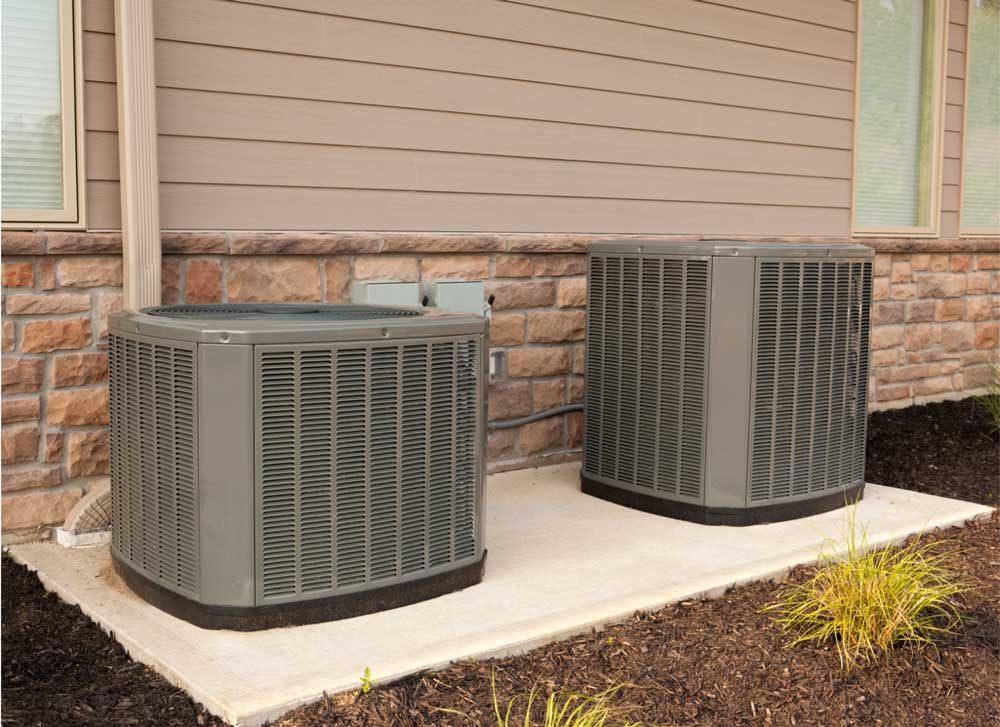
Sugar Grove homeowners invest in their properties, and their HVAC service should reflect that. Here is what Andersen brings to every call in Sugar Grove.

It can be, but not always. Low refrigerant, a restricted coil, or an undersized system can all reduce cooling capacity to upper floors. It can also be a duct distribution issue — supply air being short-circuited back to the return before it reaches the second floor. A diagnostic visit will tell you which it is and what the right fix looks like.
Common signs include ice on the refrigerant lines or indoor coil, reduced cooling capacity, and the system running longer than normal to reach the set temperature. Refrigerant does not get used up on its own — if the charge is low, there is a leak somewhere that needs to be located and repaired before recharging the system.
The membership plan covers annual maintenance visits, priority scheduling, and ongoing savings on repairs. For a home with a newer system that you want to keep in good shape, it is one of the more practical investments you can make. Ask our team for the full list of what is included when you call.
In many cases, yes. Manufacturer warranties typically cover parts, but labor and diagnostic costs are often separate. Our technicians will work with you to understand what is covered before beginning any repair. Give us a call and we can talk through your situation.
For most homes, every one to three months is the general guidance, though homes with pets, high dust, or allergy concerns may need more frequent changes. A clogged filter is one of the most common causes of reduced airflow and frozen coils, so it is one of the easiest maintenance steps with the highest impact on system performance.