



Warrenville is a small city tucked into DuPage County along the West Branch of the DuPage River, and the natural setting shapes the summer climate in ways that put steady pressure on home cooling systems. The river corridor and the forest preserves that border much of the city hold moisture in the air and create a humid microclimate that makes Illinois summers feel heavier here than on the open suburban grid nearby. A home in Warrenville depends on its air conditioner to manage not just temperature but the indoor humidity that comes with the territory.
Andersen Plumbing, Heating and AC Repair has been serving DuPage County and the Fox Valley since 1985. Our licensed technicians come prepared to diagnose and fix most cooling problems in a single visit, and we always give you a price before any work begins. We are available around the clock — because a failing AC on a humid August evening in Warrenville is the kind of problem that cannot wait until Monday.
Warrenville’s residential character is shaped by its geography. Homes tucked against the forest preserves and river corridor tend to be older and more established, while the areas closer to the Route 59 corridor include newer development from the 1990s and 2000s. Both ends of that range present their own maintenance challenges — older homes with equipment and ductwork that has been in place for decades, and newer homes where systems are now aging out of their most reliable years.
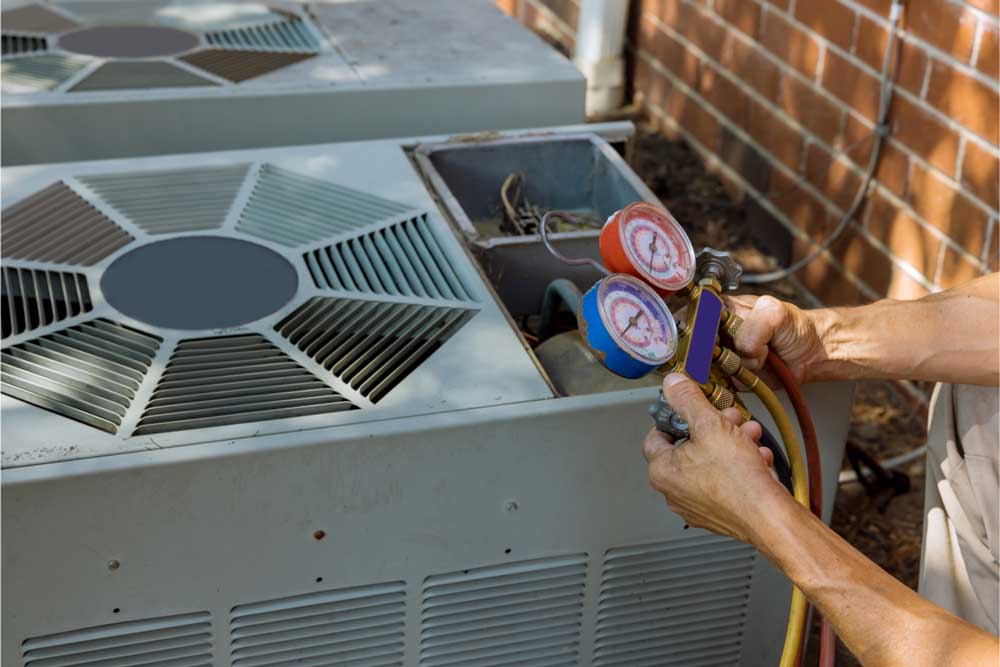
Our technicians handle the full range of repairs across both. We diagnose and repair refrigerant leaks, replace capacitors and contactors, service and test compressors, clean evaporator and condenser coils, repair blower motors and fan assemblies, and clear condensate drain lines. We also address thermostat calibration issues and control board failures that cause systems to run incorrectly. If your AC is making noise, leaking water, short-cycling, or simply not keeping the house cool, we work through the problem and give you a clear answer before we do anything.
We service all major brands and system configurations, including central air, heat pumps, and ductless mini-splits.
Warrenville’s humid river corridor means your AC works harder than it might elsewhere. These are the signals that something needs attention.
If your home feels sticky even when the system is running, that is a meaningful sign — it often indicates the AC is not managing moisture the way it should. Call us when you notice something off, and we will get to the root of it.
The proximity to the West Branch DuPage River and the surrounding forest preserves does more than make Warrenville a pleasant place to live — it creates conditions that accelerate wear on specific parts of a cooling system. High ambient humidity means evaporator coils work harder to pull moisture out of indoor air, which increases the load on the compressor and contributes to coil corrosion over time. We see refrigerant leaks in Warrenville homes at a rate consistent with other river-corridor communities in the Fox Valley, and the leaks often develop slowly enough that homeowners notice reduced cooling for a full season before anything obvious fails.
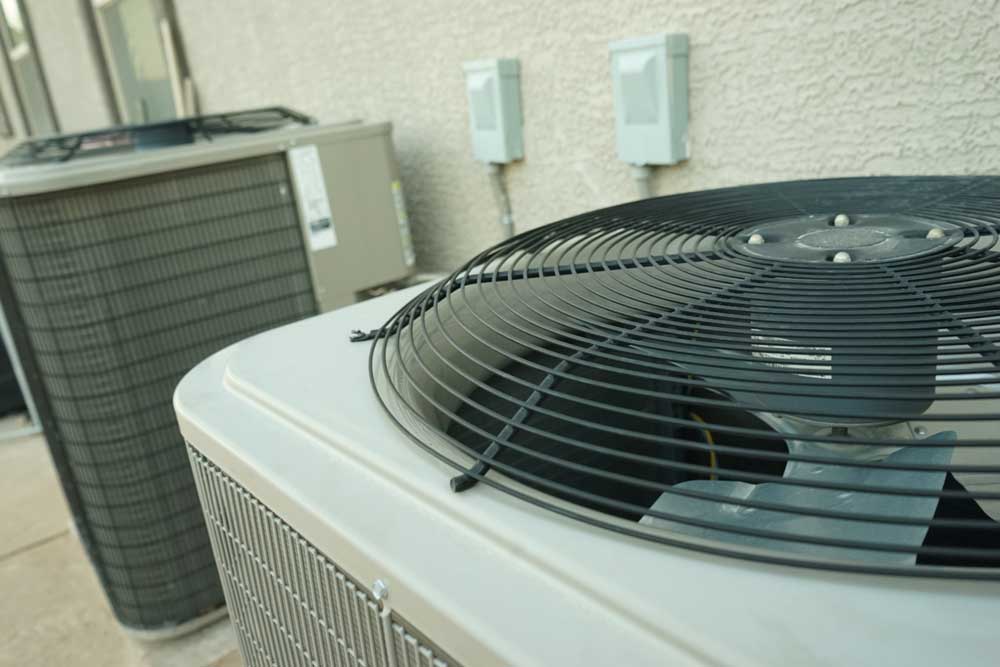
The tree coverage from the forest preserves that borders residential areas also contributes to outdoor coil fouling. Leaf debris, seed pods, and cottonwood collect in condenser units near tree lines throughout spring and into summer. A restricted condenser coil cannot release heat efficiently, which puts additional strain on the compressor during the hottest stretches of the year.
Drainage is another recurring issue in this area. Homes near the river corridor often have lower-lying lots with naturally higher water tables, and condensate drain lines that were not sized or sloped correctly can back up and cause water intrusion into finished spaces — particularly in homes with finished lower levels.
Sandra called us on a Sunday afternoon after spending two days with a system that ran constantly but could not get her home below 80 degrees. She lives on the west side of Warrenville in a wooded property near one of the forest preserve access points, in a home built in the mid-1980s that she described as having had the same outdoor unit for as long as she could remember.
Our technician found the condenser coil heavily fouled with years of accumulated leaf debris and cottonwood — a predictable condition for a unit sitting in a heavily wooded location. The refrigerant pressure was also low, pointing to a slow leak. The tech cleaned the condenser coil, located a leak at a coil fitting connection, repaired it, and recharged the system to spec. Before leaving, he noted that the system was original to the home — over 35 years old — and while it was running again, Sandra should begin thinking about the realistic end of its service life. She appreciated the honesty and asked us to send information on what a replacement conversation would look like when she was ready for it.
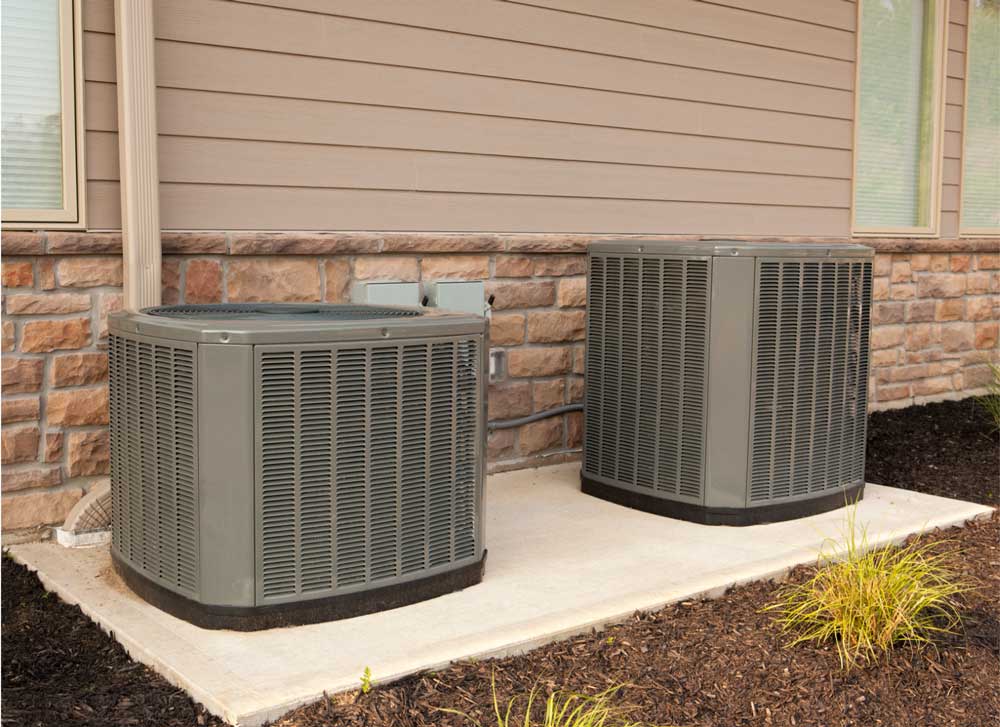
Warrenville homeowners value quality and straightforwardness, and that is exactly what Andersen has delivered across DuPage County for four decades. Here is what you get when you call us.
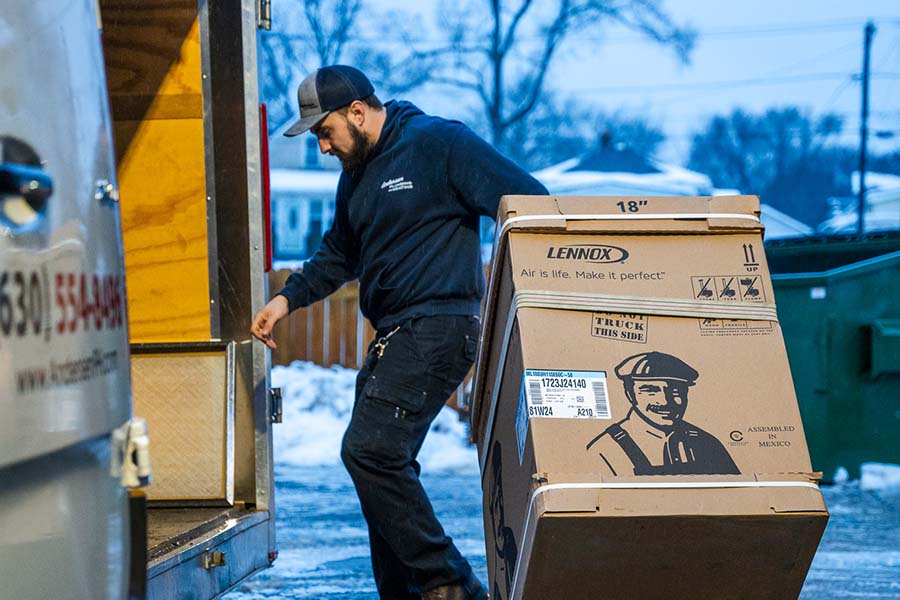
An air conditioner that is running but not controlling humidity well is usually dealing with one of a few issues — low refrigerant, a dirty evaporator coil, or a system that is oversized for the space and short-cycling before it can adequately dehumidify the air. A technician can identify which issue applies to your system and recommend the right fix.
Most central air conditioning systems have a useful life of 15 to 20 years with regular maintenance. Equipment that has run in humid, tree-heavy environments without consistent service may show significant wear earlier than that. If your system is approaching that range, our technicians will give you an honest read on where it stands and what your options are.
Yes. We are available 24 hours a day, seven days a week, including weekends and holidays. We treat after-hours calls the same as any other — a licensed technician dispatched to your home as quickly as possible.
A check-up covers cleaning the coils, checking refrigerant levels, testing capacitors and contactors, inspecting the drain line and drainage, and confirming the system is operating within normal parameters. Catching worn components during a check-up typically costs far less than repairing the damage they cause when they fail mid-season.
Yes. We offer financing options to help make larger repairs and full system replacements more manageable. Our team can walk you through the available options when we assess your system so you can make a decision that fits your budget.