



Plumber in West Chicago, IL
- Fast & Reliable
- Trusted Quality
- Locally-Owned
- Honest & Upfront
- Fast & Reliable
- Trusted Quality
- Locally-Owned
- Honest & Upfront
West Chicago grew up around the railroad, and that origin story still shapes the city’s character today. The older neighborhoods near the historic downtown and the former rail yards contain some of the most densely layered residential plumbing in DuPage County, with homes built in the early 1900s sitting a few blocks from mid-century ranches and both sitting alongside newer infill construction that arrived as the city expanded in recent decades. The result is a community where housing age varies more sharply from block to block than it does in the planned suburban communities that surround it, and where a plumber who only knows one era of construction will eventually find themselves in over their head.
Andersen Plumbing, Heating and AC Repair serves West Chicago and the surrounding DuPage County communities. Our licensed plumbers are available around the clock, and we bring honest, upfront service to every call here. We tell you what is wrong, what it costs, and what the surrounding system looks like so you are not surprised a year from now by the thing we saw but did not mention.
Our Services:
- AC Installation & Replacement
- AC Maintenance
- AC Repair
- Air Handler
- Apollo Heat System
- Boiler Installation & Replacement
- Boiler Maintenance
- Boiler Repair
- Commercial HVAC Services
- Ductless AC Installation & Replacement
- Ductless AC Repair
- Furnace Installation & Replacement
- Furnace Maintenance
- Furnace Repair
- Thermostats
Why Homeowners in West Chicago, IL Trust Us
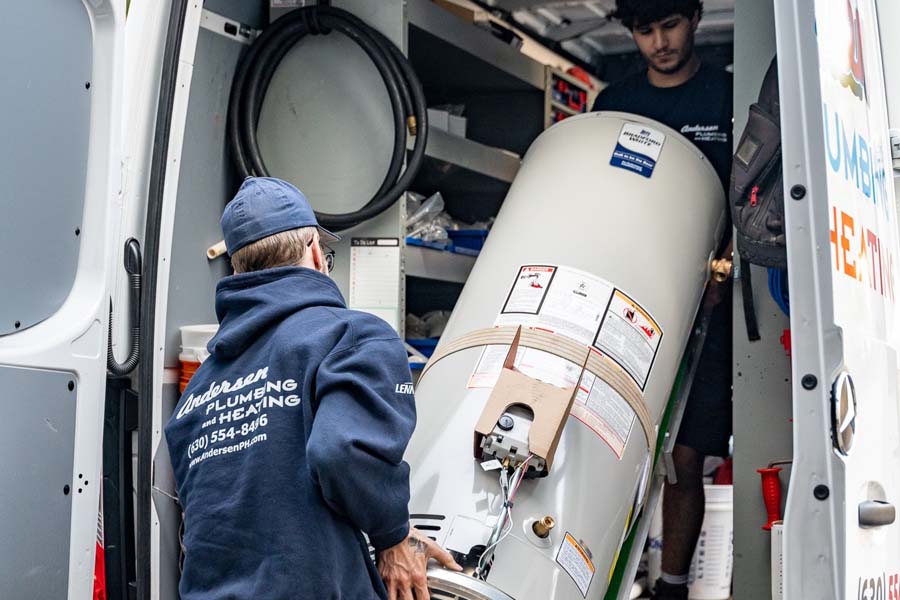
Plumbing Repairs in a City Built Around the Railroad
West Chicago’s railroad heritage left a physical imprint on the city that extends below grade. The rail yard and industrial corridor that defined early West Chicago created soil conditions in and around the downtown neighborhoods that are distinct from the surrounding residential DuPage County landscape. Fill material used during historical industrial development can alter drainage behavior and soil composition in ways that affect how water moves under foundations in those older blocks, contributing to basement moisture challenges in properties closest to the former industrial footprint that newer suburban homes simply do not experience.
The oldest homes in West Chicago near the downtown core carry the plumbing history common to early-twentieth-century construction throughout northeastern Illinois. Lead service connections from the original municipal water installation era are present in some properties, galvanized steel supply systems installed during mid-century updates are now well past their useful life in others, and cast iron drain lines from multiple renovation eras coexist in ways that make tracing a problem a genuine diagnostic exercise rather than a routine swap.
Away from the historic core, West Chicago’s mid-century and newer residential neighborhoods present the equipment-aging profile common across DuPage County. Homes from the 1970s through the early 2000s are generating the water heater, sump pump, and supply connection replacement calls that define this stage of the suburban housing lifecycle. DuPage County’s hard water supply has been contributing to that acceleration since each of those components was first installed.
Plumbing Installations That Account for West Chicago's History
Installing new plumbing in an older West Chicago home near the downtown core requires accounting for what the building has been through, not just what it needs today. A water heater replacement in a 1920s home that still has its original service connection is an opportunity to assess the lead risk and flag the condition of the surrounding supply infrastructure at the same time. We treat every installation in an older West Chicago property as a chance to give the homeowner a clearer picture of their system rather than a narrow transaction focused only on the component being replaced.
Whole-home repiping is the installation that produces the most comprehensive improvement in West Chicago’s pre-war homes. Replacing galvanized or lead-era supply infrastructure with copper or PEX simultaneously resolves water quality concerns, normalizes pressure throughout the house, and eliminates the category of fitting and joint failures that follow aging supply pipe into its final years. For a home where the water has tasted different for years and the pressure has never felt quite right, a repipe addresses both at the source.
For West Chicago’s newer residential areas, water softener installation is the most consistently valuable addition available. DuPage County water hardness is a documented characteristic of the regional supply, and a softener installed alongside any major water heater or appliance replacement extends the life of the new equipment by reducing mineral accumulation from the first day of operation. In a home that has never had a softener, the difference is measurable within the first year in reduced scale buildup on fixtures and improved appliance efficiency.
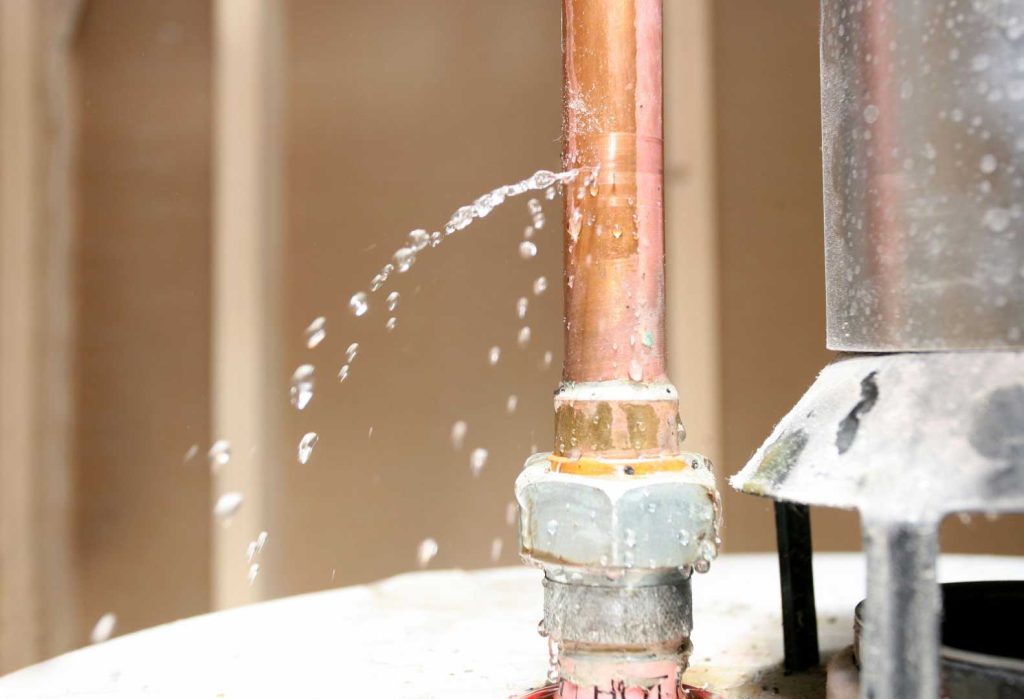
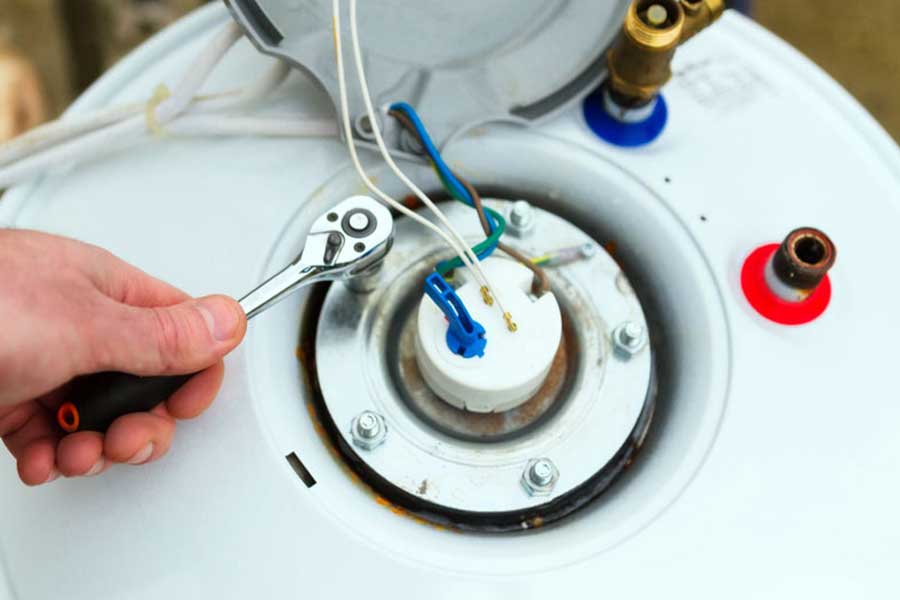
Plumbing Services We Offer in West Chicago
Our team handles residential plumbing across the full range of West Chicago’s housing stock, from the oldest downtown properties to newer construction on the city’s edges. Here is what we take care of regularly.
- Drain cleaning and clog removal
- Lead service line assessment
- Pipe leak detection and repair
- Whole-home repiping
- Water heater repair and replacement
- Sump pump service and installation
- Battery backup sump pump installation
- Toilet repair and replacement
- Faucet and fixture installation
- Water softener installation
- Camera inspection and line diagnosis
- Emergency plumbing, 24/7
West Chicago’s layered housing history means we encounter a wider range of situations here than in a community built entirely in one decade. Whatever your home is dealing with, we have the experience to work through it accurately and the honesty to tell you what it actually needs.
A Service Call in West Chicago's Historic Neighborhood
The blocks surrounding West Chicago’s historic downtown contain some of the most characterful residential properties in DuPage County, and also some of the most technically complex plumbing situations our team encounters in this part of the region. These homes have been owned and updated by multiple generations of families, and the plumbing inside them reflects that layered history in ways that are not always obvious from the outside.
A homeowner named Frank called us after noticing that both his hot and cold water had taken on an intermittent metallic taste that was most pronounced in the morning on the first draw from any fixture. The house was a well-kept two-story built in the early 1920s, and Frank had owned it for about twelve years. The morning-first-draw timing was the diagnostic clue. Water that sits overnight in a supply line picks up whatever the pipe material releases during stagnant contact, and a metallic taste that is worst on the first draw and clears after running the tap for a minute points directly to the supply pipe the water rests in overnight. Our plumber ran a systematic check of the supply materials from the street connection forward. The service connection from the municipal main to the house was original to the early installation and was confirmed as lead. We documented the finding clearly, provided Frank with information on the health implications and replacement options, and submitted the assessment for his records. Frank scheduled the service line replacement for the following month.
That morning-first-draw metallic taste pattern is one of the most important symptoms to act on in West Chicago’s oldest homes. It is the supply line telling you what it is made of, and in homes of that age in that part of the city, the answer is sometimes lead.
Why West Chicago Homeowners Choose Andersen
West Chicago homeowners need a plumber who can work across a century of construction without treating every house the same. Here is what our customers in this city consistently come back to.
- Family-owned, DuPage County area service
- 24/7 emergency availability
- Upfront pricing before any work begins
- Licensed plumbers experienced with pre-war and modern construction
- $129 Membership Plan for year-round savings
- Financing available for larger repairs and replacements
- Lead service line assessment available for older properties
When you call Andersen for a West Chicago home, you get a team that already knows what a 1920s downtown property asks of a plumber and what a 1990s subdivision home on the city’s edges needs as its equipment ages. We bring both to the driveway and give you a straight answer about what we find.
Frequently Asked Questions
My water tastes metallic in the morning but clears after I run the tap. Should I be concerned?
How do I find out if my West Chicago home has a lead service line?
What does historical industrial land use near my home mean for my basement or plumbing?
How does DuPage County's hard water affect my plumbing fixtures over time?
What does the $129 Membership Plan include for West Chicago homeowners?
The Membership Plan provides scheduled maintenance visits, priority scheduling when something comes up urgently, and savings on service calls throughout the year. For West Chicago homeowners in older downtown properties where aging supply infrastructure and potential lead connections benefit from regular professional attention, or in newer residential areas where hard water and original equipment are aging together toward a replacement window, a maintenance relationship with a plumber who knows your system over time is one of the more practical ways to stay ahead of what both ends of that housing age spectrum can produce. Call us for current details on what the plan covers across plumbing, heating, and cooling services.